

All we need is Action & Accountability (the ever missing A’s)
19th March 2021 – by Heston Russell
On the 10th and 11th of March the Office of the National Commissioner for Defence and Veteran Suicide Prevention held a Research Symposium at the QT Hotel in Canberra themed “Defence and Veteran Suicide: Prevention through Understanding”. This symposium brought together a number of key speakers from across the academic and research community in an effort to “help establish an Academic Baseline” on topics affecting the current Veteran Suicide crisis that has now seen over 700 veterans take their own lives since 2001.
The opening and keynote speaker for the event was Christine Morgan, CEO of the National Mental Health Commission and National Suicide Prevention Adviser to the Prime Minister. Her words were some of the most relevant and accurate as she stated that many of the issues contributing to the suicide rate within the Veteran community are “not mental health issues” but could be traced to an accumulation of “psychological stress commonly experienced by Veterans” particularly during our transition from the military and veterans affairs support systems. Christine went further to simply state that these contributing factors could readily be addressed through immediate “pragmatic prevention and intervention”.
Other notable speakers included Geoff Evans, Veteran and CEO of Disaster Relief Australia who expertly depicted the common crisis trajectory of Veterans resulting in homelessness and suicide. Soon to be Dr Nikki Jamieson provided compelling insights into Moral Injury & Trauma that is arguably now the leading cause of psychological and emotional distress for Veterans recently separated from the Australian Defence Force, again due to the accumulated failings of the transition and life after service support frameworks. This was confirmed by large bodies of data drawn from expert research conducted by the Gallipoli Medical Research Institution that found this to be the driving cause of Suicidal ideation and attempts in male Veterans. The same was noted for female Veterans however, sexual assault or abuse was listed as higher in this demographic.
Unfortunately the Chief of the Defence Force, Angus Campbell, was not present for the afternoon period of the Symposium when this research data was presented. Neither DVA nor Defence provided accounts or updates of their actions, efforts or responsibilities in combating the crisis or responding to any of the presentations provided. The National President of the RSL – the latest, most funded and longest standing Ex Service Organisation was also a notable absence, however a key presentation led by RSL QLD was highly praised and extremely relevant to the discussions.
So with all this assembled intellect and expertise, what was achieved? What information will to be taken to implement immediate suicide prevention, now?
I proposed this direct question to the Interim Commissioner, Dr Bernadette Boss, who used it as a chance to highlight that this could only be achieved with a standing National Commissioner, her intended role, as opposed to a Royal Commission that would simply be “filed in a draw”. However, my question came after an excellent presentation from Professor Sandy McFarland AO, who provided an excellent summary of the existing reports and recommendations pertaining to Veteran suicide in Australia and the accountability of DVA procedural and systematic failures.
Professor McFarland detailed findings from previous Government reports including:
The Productivity Commission Inquiry Report – A Better Way to Support Veterans, The Australian Institute of Health & Welfare Report National suicide monitoring of serving and ex-serving Australian Defence Force personnel: 2020 update, and the Coronial Inquest into the Death of Jesse Bird report and recommendations.
His final statements were echoed far too often already “how much more research is needed to simply action the recommendations that already exist” and “how many more reports does it take to see accountability actioned”.
Professor McFarland went further to state that he was actually fearful that his open and honest presentation of the reports and recommendations that clearly indicated the continued failings of the Department of Veterans Affairs may impact on his success in continuing and securing additional contracts and funding through DVA and Defence, as this had previously been the case when he had provided such detailed information – with “a letter turning up at his university office demanding that he be removed from the contracted work”.
The Symposium was a success for a number of reasons – it drew together a number of excellent speakers and expertise to provide updates to what is already known on the majority of the subject. However what it also clearly indicated the simple fact that if the Minister for Veterans Affairs held his Department accountable to the recommendations already completed by numerous previous government reports, then we would not need a National Commissioner to do this…
6 Ministers for Veterans Affairs in the last 8 years have likely made this a difficult task, but now with Darren Chester as the Minister since March 2018 I find it shocking that he even supports the notion of a need for a National Commissioner, as this essentially highlights his inability to effectively manage his portfolio. Has the task become too much? Do we really need a National Commissioner to ensure the Department of Veterans’ Affairs does its job of supporting veterans post service and to better support the Department of Defence to do the same?
This also comes off the back of the recent approval and funding for the establishment of the Joint Transition Authority within Defence. This organisation’s role is to address the specific critical incidents and issues widely reported as primarily accumulating the majority of psychological and emotional trauma for personnel experienced during their transition from the Defence Force.
Sadly, the Symposium fell very short of actually achieving any tangible actions towards preventing even one suicide – with the onus moreso now on those in attendance to take the required action. Despite the majority of those present not being government funded and also without the 27 salaried staff members the Interim Commissioner, Dr Boss, has in support.
Suicide prevention is not all about powers and the prestige of a position – it about practical tactical actions – pragmatic processes, solutions and accountability.
Suicide prevention is not all about powers and the prestige of a position – it about practical tactical actions – pragmatic processes, solutions and accountability. I would love to know how much taxpayers money has already been wasted in organising the symposium and roundtable events that should and could be just as easily overseen by DVA. How much has been spent on the salaries, travel and expenses of Dr Boss and her team of 27? These questions are not my own, they are those of thousands of Veterans and their families. Veterans who have contemplated or attempted suicide. Families that have lost their loved ones to suicide. These symposiums and self serving exercises in revising what is already established and reported facts serve nothing but to exacerbate the emotion and outrage at the Governments continue delay to do what should have been done in February 2020 and call a Royal Commission in Veteran Suicide.
The longer our government persists around with tokenism and distractions, the greater the moral injury they continue to fester within our Veteran community and families.
The final comment to this point, and in greatest summary of the Symposium, was a simple conversation I had with a lady who sought me out during the lunch break on day two. This woman was well presented and composed and she simply stated:
“Why has no one actually done anything with all of this information that isn’t new? Why is everyone more interested in giving out and collecting business cards than taking actions right now, today?”
“Why aren’t we hearing from more Veterans like you who have experienced exactly the failings that made you want to take your own life?”
“Why won’t the government call a Royal Commission?”
This lady was a mother who had lost her veteran daughter to suicide one year ago. Her two sons are currently serving in the Army. As I hugged her all that I could do was agree and promise that there are those of us who will ensure her voice is heard, and real action is taken.
The most gripping statistic that was again highlighted during the Symposium was that already published in The Australian Institute of Health & Welfare Report 2018: During our time in service, the suicide rate of Veterans is less than half that of the wider community average. However after service, this suicide rate more than doubles, and continues to do so on an upwards trend.
If the Prime Minister and standing government is serious about saving even one Veteran’s life – they would call a Royal Commission today.
Enough is enough, it’s time for action. If the Prime Minister and standing government is serious about saving even one Veteran’s life – they would call a Royal Commission today.
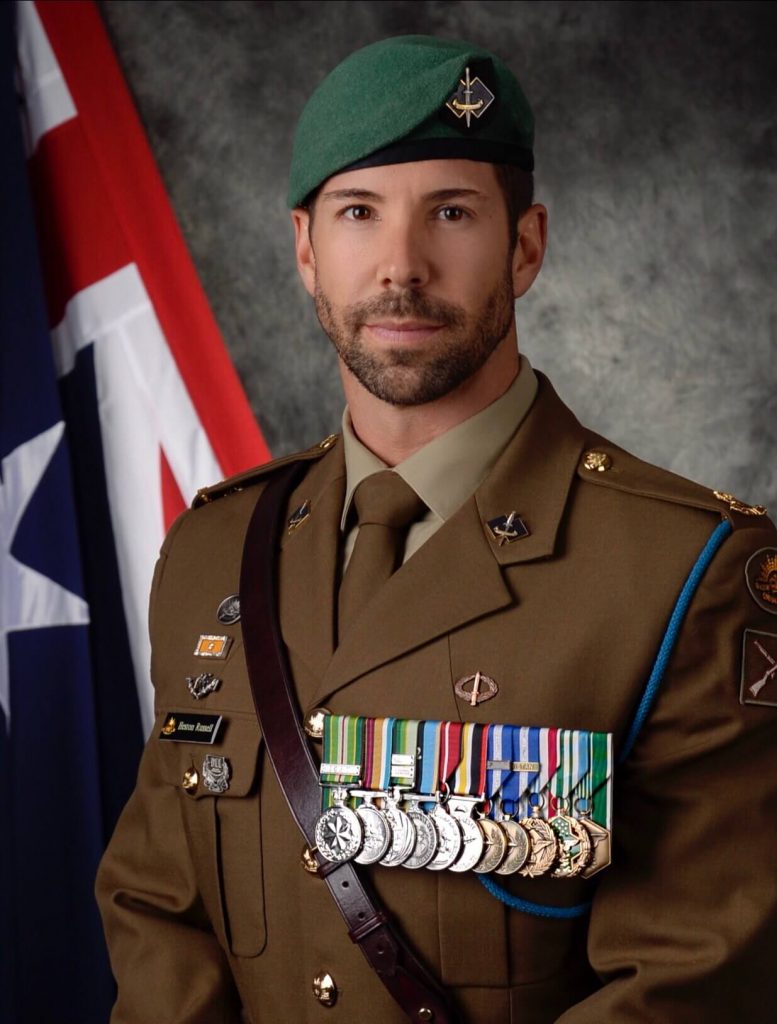
Heston Russell
Retired Special Forces Officer
Campaigning for Change
There is so much that needs to be done.
Here you can find and join in my campaigns - together we can work as a team to achieve real change and fight for common sense.
If you can, please contribute. Your support is needed now.