

October 10, 2026
25 Years Since Afghanistan: Two Truths, One Responsibility
Reflections on the Australians who served, the failures of leadership, the lessons of history, and the responsibility we all carry forward.

Twenty-five years ago, Australia began what would become the longest conflict in our nation's history. What followed was two decades of extraordinary service, sacrifice, courage, hardship, achievement, heartbreak and human connection.
More than 35,000 Australians served in Afghanistan or in support of operations across the Middle East. Forty-one Australians were killed during the conflict, and the Australian War Memorial now honours 47 Defence personnel who died during or as a result of their service.
Behind every number is a person. Behind every person is a family. And behind every deployment is a story that deserves to be understood. As we approach the 25th anniversary of Australia's first deployment to Afghanistan, I find myself reflecting on far more than the war itself.
I reflect on the people who shaped me. The extraordinary experiences we shared. The lives we changed. The mates we lost. The country we left behind. The Australia we returned to. And the responsibility we now carry to ensure those experiences and sacrifices continue to mean something.
Above all, I believe this anniversary asks us to be mature enough, and courageous enough, to hold two truths equally.
We can be immensely proud of the Australians who fought the war, while being profoundly disappointed in the political and strategic leadership that determined its outcome.
We can celebrate the extraordinary things our people achieved while acknowledging the tragedy of what was ultimately lost. We can honour the service without defending every decision made in its name. And we can recognise the failures of the past without allowing them to define the future of those who served. Neither truth should diminish the other. In fact, I believe our responsibility is to carry both.
The very best of ourselves, in the most challenging circumstances
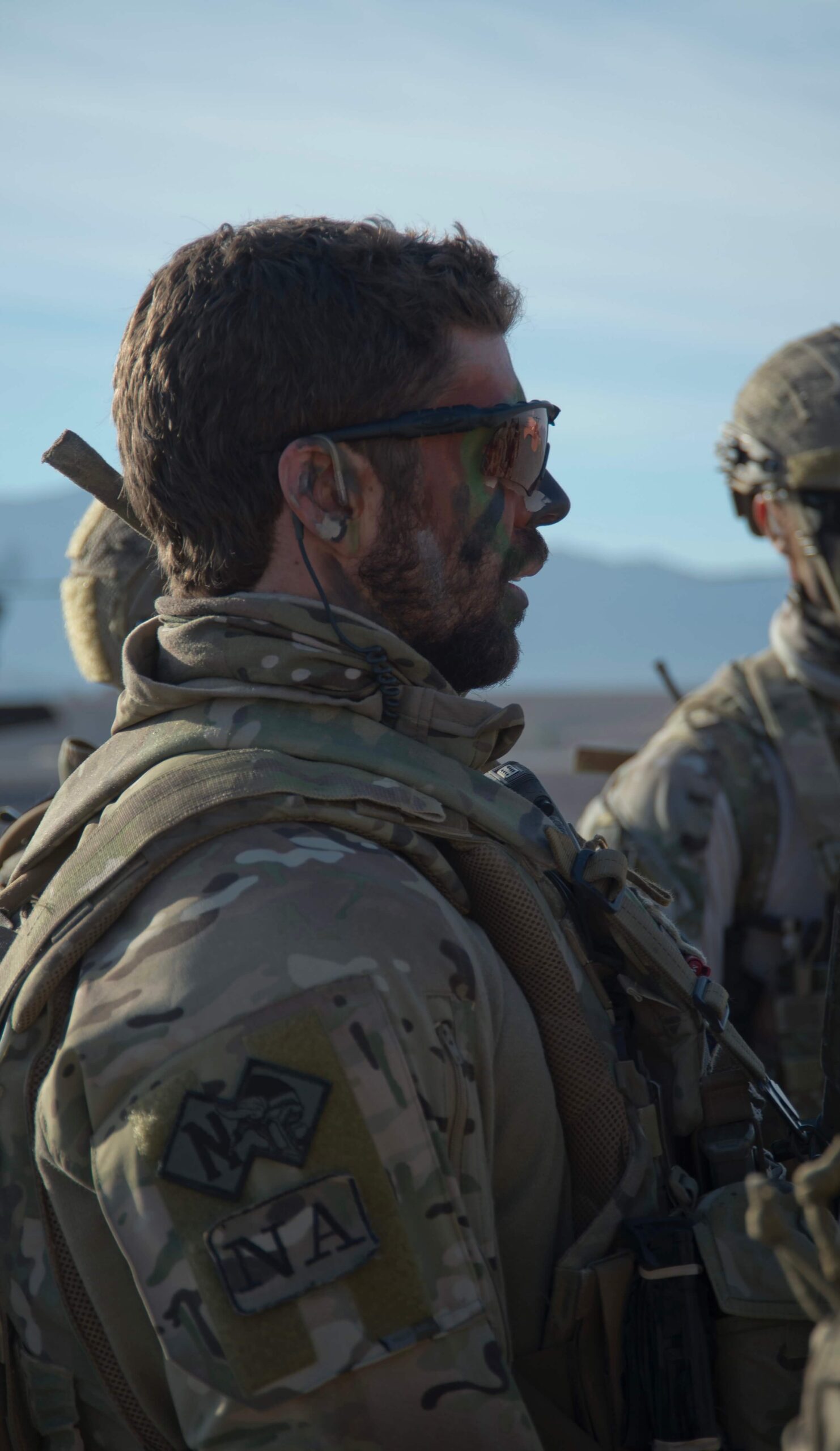
I spent 16 years serving in the Australian Army, including nine years as a qualified Special Forces Officer and combat commander.
Across five combat deployments to the Middle East, I had the extraordinary privilege of leading and serving alongside some of the finest human beings I have ever known.
I experienced courage, compassion, ingenuity, resilience, humour, humility and selflessness at levels that remain difficult to adequately describe.
I saw Australians demonstrate extraordinary professionalism under immense pressure. I saw people repeatedly put themselves in harm's way for their mates, their mission, and for people they had never met.
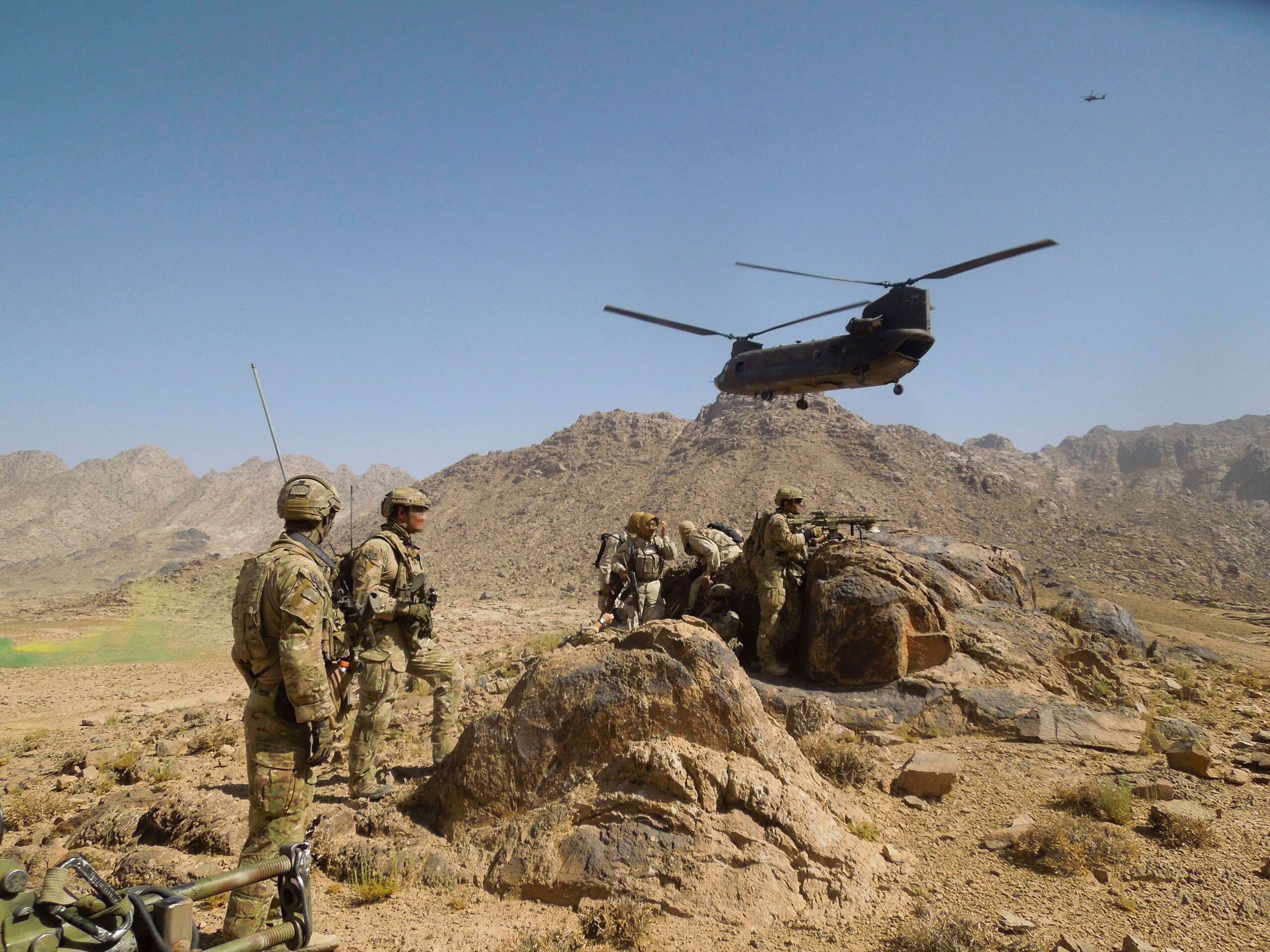
I witnessed the remarkable contributions of our Special Forces, conventional forces, aircrews, engineers, intelligence personnel, medics, logisticians and the countless people whose work made our operations possible.
I served alongside coalition partners from around the world, united by common purpose, mutual respect and the trust forged through shared adversity.
And I experienced something that, even today, I struggle to fully explain to those who have never worn the uniform.
The extraordinary sense of belonging that comes from being part of a team where everyone understands their purpose, knows their responsibility, and trusts one another with their lives.
We weren't simply colleagues.
We were families by choice.
We celebrated achievements together, endured hardships together, laughed in circumstances where laughter sometimes seemed impossible, and carried one another through experiences that would change us forever.
There were moments of incredible excitement, achievement and pride. Moments of exhaustion, fear, frustration and grief. Moments that tested every aspect of our character, and others that revealed strengths we never knew we possessed.
And through it all, there was purpose.
For many of us, these were not simply the most demanding years of our lives.
They were also the years in which we experienced some of the very best versions of ourselves.
That is something I will never apologise for celebrating. Because when I think about Afghanistan, I don't immediately think about politicians, headlines or the Taliban. I think about my team. I think about who we were together. And I think about just how extraordinary Australians can be when united by purpose, community, service and excellence.
The hope we helped create, and the heartbreak of what followed
Of course, we cannot reflect on Afghanistan without confronting how it ended. After two decades of international military involvement, the Taliban returned to power in August 2021.
For those of us who served, the images of Kabul's collapse were difficult to comprehend. Not simply because of what they represented strategically, but because of the people we had known, the communities we had worked alongside, and the futures we had helped make possible.
During those twenty years, millions of Afghans experienced opportunities previously denied to them. Children attended schools. Women and girls pursued education and employment. Communities experienced improvements in infrastructure, healthcare and access to services. Afghan security personnel worked alongside coalition forces, often at extraordinary personal risk.
We must never romanticise the realities of Afghanistan. Progress was uneven, insecurity remained, corruption undermined institutions, and the conflict inflicted enormous suffering on Afghan civilians.
But neither should we erase the genuine progress that occurred. Australians helped create and protect opportunities that changed lives.
That mattered.
And for the women and girls of Afghanistan, the consequences of the Taliban's return have been particularly devastating. There is something profoundly cruel about denying someone the opportunity to hope.
But perhaps even more devastating is allowing someone to experience freedom, to imagine a different future, to believe their daughters might live lives their mothers never could, and then watching those possibilities be taken away.
That is a human tragedy that extends far beyond the politics of war. And yet, I refuse to accept that everything achieved during those twenty years was meaningless.
Just because something didn't last forever doesn't mean it didn't matter.
The lives changed, the relationships forged, the opportunities created and the humanity demonstrated remain part of our history.
No political outcome can erase them.

Twenty years of war.
But where was the strategy for peace?
This anniversary must also be an opportunity for honest reflection on political and strategic leadership.
Australia entered Afghanistan in the aftermath of the September 11 terrorist attacks, joining our allies in confronting al-Qaeda and the Taliban regime that had provided it sanctuary. There were legitimate national security objectives and compelling reasons for our involvement. But as the years progressed, the mission evolved.
Counterterrorism became entangled with counterinsurgency, reconstruction, institution-building, governance reform and the enormous ambition of establishing a stable Afghan state capable of sustaining itself. And somewhere along that journey, I believe the clarity between what we were asking our military to achieve and what our political leadership was prepared to sustain became increasingly difficult to reconcile.
Successive Australian governments, alongside our coalition partners, carried responsibility for that evolving strategy. Governments changed. Political priorities shifted. Military rotations came and went. Objectives were revised. Progress was measured, reported and often celebrated.
But what was the enduring definition of success?
What was the realistic political end state?
What would happen when international military support was withdrawn?
And had we genuinely established the conditions necessary for the Afghan institutions and security forces we helped build to survive without us? These were not simply questions for soldiers on the ground. They were questions for the political and strategic leadership responsible for committing our nation to war.
I am immensely proud of the professionalism with which Australian personnel executed the missions they were assigned. But tactical excellence cannot, by itself, compensate for strategic uncertainty.
You can win extraordinary battles, achieve extraordinary things, and still find yourself part of a war that ends without the strategic outcome you were sent to help achieve.
That is one of the hardest lessons of Afghanistan. And one that we cannot afford to ignore.
The withdrawal in 2021 was the culmination of decisions taken over many years, across successive governments and coalition administrations. It is too simplistic to place the entire responsibility on one politician, one government or one moment. But it would be equally irresponsible to allow the complexity of those decisions to become an excuse for avoiding accountability.
Our military personnel were expected to demonstrate leadership, competence, integrity and accountability in circumstances where mistakes could cost lives. We should expect no less of those responsible for the political and strategic decisions that send them there.
This is not about political point-scoring.
It is about ensuring the next generation of Australians who answer their nation's call are never asked to bear the consequences of lessons we were unwilling to learn.
The lessons we should have learned from Vietnam
Perhaps one of the most confronting aspects of Afghanistan is how familiar parts of this story are to the generation that came before us.
My grandfather's generation experienced Vietnam.
Another conflict in which Australians demonstrated extraordinary courage, professionalism and commitment, only to return home to a nation grappling with the political controversy, strategic disappointment and human consequences of a war whose outcome was far removed from what had originally been intended.
Different wars. Different circumstances. Different generations. But some painfully familiar lessons.
The distance between tactical achievement and strategic success. The disconnect between political decision-makers and those required to execute their decisions. The difficulty of explaining a complicated war to the public. And the profound challenge of returning home to a society that did not always understand what its service personnel had experienced.
I have been incredibly fortunate to receive the support, mentorship and friendship of Vietnam Veterans throughout my own journey. Men who served in circumstances different from mine, but who understand things that often require very few words between us. They understand the pride of service. The bonds of mateship. The disappointment of a strategic outcome that does not reflect the sacrifices made along the way. And the frustration of watching the public narrative of a war become confused with the character and conduct of the people who served in it.
Their generosity towards my generation has meant more than I can adequately express. There is something deeply moving about veterans who experienced their own challenges decades earlier reaching out to support those now walking a familiar road. They have reminded me that service is not confined to a particular conflict, generation or uniform. It is a shared inheritance.
A responsibility passed from one generation to the next. And yet, I cannot help asking why Australia has had to relearn so many of the same lessons.
Why did we again struggle to communicate the purpose of a prolonged conflict?
Why did we again allow the experiences of our service personnel to become disconnected from public understanding?
Why did we again find ourselves confronting the challenges of transition, identity, purpose and belonging after the war had ended?
If we truly honour the service of previous generations, surely we must do more than remember their sacrifices. We must learn from their experiences.
That is a responsibility we owe both the Vietnam veterans who helped guide us and the generations who will one day follow.
Australia went to war.
But did we take Australia with us?
One of my strongest criticisms of our involvement in Afghanistan is not simply how the war ended.
It is how poorly I believe successive governments and much of our media communicated the journey to the Australian people throughout those two decades.
Australia was at war.
Australian sons and daughters were risking their lives.
Families were enduring repeated deployments, uncertainty and sacrifice.
Our military was undertaking extraordinarily complex operations, often alongside coalition partners in environments where the consequences of every decision were profound.
Yet how much did the average Australian genuinely understand about what we were doing?
What were our missions?
What did our successes look like?
Who were the people serving?
What did they achieve?
What did they learn?
And what did those experiences mean for the Australians who would eventually return home?
Of course, operational security places necessary limitations on what can be shared, particularly concerning Special Forces operations. But protecting sensitive information is not the same as failing to communicate the purpose, achievements and human experiences of our service.
I believe successive governments and significant parts of our media failed to adequately bring the Australian public along on that journey. And the consequences did not end with our withdrawal. They followed us home.
Many of us returned from environments where we had experienced extraordinary responsibility, leadership, purpose, identity and belonging. We had been entrusted with lives, complex missions and decisions of enormous consequence. We had learned to perform under pressure, adapt to adversity, solve problems, lead people and work as part of exceptionally capable teams. And then we returned to a society that often knew remarkably little about those experiences.
A society where conversations about veterans too frequently focused on trauma, dysfunction, injury and what might be wrong with us.
Let me be clear: the injuries, mental health challenges and suffering experienced by veterans and their families are real. They deserve compassion, recognition and meaningful support.
But they do not define the entirety of our veteran community. Nor should they overshadow the extraordinary skills, character and capabilities our people possess.
Our Veterans are not simply people Australia needs to look after. They are people Australia should be learning from, investing in and celebrating.
We should be recognising their leadership in business, their contribution to communities, their capacity to mentor future generations, and the values they continue to demonstrate long after leaving the uniform behind.
And we should better understand that, for many veterans, one of the greatest challenges of transition is not simply recovering from what they experienced.
It is learning how to rediscover the extraordinary sense of purpose, community and identity they experienced while serving.
We should have understood this better after Vietnam.
We should understand it better now.
The fight to tell the truth about our service
For those of you who have been part of my community over the past six years, you know that my own journey since leaving Defence has been anything but quiet.
And you have been part of it.
Together, we have challenged narratives, questioned decisions, demanded accountability and fought to ensure the extraordinary service of Australians in Afghanistan is not reduced to the most damaging headlines.
Particularly when it comes to our Special Forces community.
I have never argued that military personnel should be above the law.
Quite the opposite.
The standards expected of those entrusted with the authority to use force on behalf of our nation must be exceptionally high.
Credible allegations of wrongdoing must be investigated properly. Individuals must be held accountable for their own conduct, through fair processes and according to law.
But accountability must never become collective condemnation.
Allegations against individuals must never become a licence to rewrite the history of entire units, disregard the service of thousands, or diminish the sacrifice of those who acted with courage, professionalism and integrity.
And the pursuit of truth must never be confused with the pursuit of headlines.
When decisions were made to strip the Meritorious Unit Citation from the Special Operations Task Group, we challenged them.
We stood up for the recognition earned through extraordinary service and collective achievement, and for the principle that the alleged actions of individuals should not automatically erase the honour of everyone who served alongside them.
For many, those citations represented far more than a piece of ribbon.
They represented years of sacrifice, service and achievement. The contribution of people who had done their duty, often at enormous personal cost.
And the memory of those who never came home.
I could not accept that such recognition should be so easily diminished.
Nor could so many of you.
We wrote, advocated, challenged and refused to let the issue disappear.
And when the ABC published allegations about my service and the actions of my soldiers in Afghanistan, I made the decision to fight those allegations in the Federal Court.
Not because I wanted to spend years in litigation.
Not because I wanted my life defined by a legal battle.
But because I knew what had happened. I knew the people involved. And I understood the consequences of allowing serious, damaging allegations to remain unchallenged.
In 2023, I won my defamation case against the ABC.
It was a deeply significant outcome for me personally, but it represented something much larger.
It demonstrated that powerful media organisations can be challenged, that their reporting must be subject to scrutiny, and that those who have served are entitled to defend their reputations through the same legal processes as every other Australian.
It also reinforced something I believe is essential to a healthy democracy.
Accountability must work in every direction.
Our military must be accountable for its actions.
Our governments must be accountable for their decisions.
And our media must be accountable for the accuracy, fairness and consequences of what they publish.
None of those responsibilities should be optional.
Throughout these years, I have been asked why I continue to speak out.
Why I keep challenging decisions.
Why I continue to fight battles that can be exhausting, confronting and, at times, deeply personal.
The answer is simple.
Because I know the people I served alongside.
I know their character.
I know their sacrifices.
I know what we achieved.
And I refuse to accept that the story of our service should be defined solely by those who were never there to witness it.
We must never allow the loudest voices in the room to become the only voices history remembers.
To those who have stood alongside...
Thank you
This is where I want to pause and speak directly to you.
To the people reading this.
Over the past six years, many of you have been part of an extraordinary journey alongside me.
Some of you served.
Some of you are the parents, partners, children or friends of those who served.
Some of you have never worn a uniform, but believe deeply in the values of service, fairness, accountability and standing up for what is right.
You have written letters.
Signed petitions.
Shared stories.
Offered encouragement.
Challenged misinformation.
Supported our campaigns.
And stood beside me through some of the most difficult and demanding periods of my life after Defence.
You have helped us challenge the attempted removal of honours, confront damaging narratives, fight for accountability and continue telling the stories of the extraordinary Australians who served our nation.
There were moments when the obstacles seemed overwhelming.
Moments when it would have been easier to walk away.
But you reminded me that the values we learned through service — courage, commitment, integrity and loyalty — do not disappear when we take off the uniform.
And neither does the power of community.
I have often spoken about the extraordinary sense of belonging I experienced in the military.
What I have discovered over these past six years is that those same bonds of purpose and shared commitment can continue to grow in the world beyond it.
You have helped prove that.
And for that, I am deeply grateful.
This has never simply been my fight. It has been our shared commitment to ensuring the truth of our service is heard, our people are respected, and future generations are better protected.
Thank you for standing alongside me.
Our next mission — and the fight that continues
As we mark this anniversary, I believe our responsibility is not simply to look backwards.
It is to ask what we are going to do with everything we have learned.
Those of us who served carry extraordinary experiences and lessons.
About leadership and responsibility.
About the consequences of decisions.
About the importance of clear strategy and shared purpose.
About courage, compassion, trust and the strength of human connection.
About the fragility of freedom.
And about the extraordinary things ordinary Australians can achieve when they are given the opportunity to serve something greater than themselves.
We owe it to those who never came home to ensure those lessons are not wasted.
We owe it to those still serving to ensure they are better supported, better understood and better prepared for the challenges they may face.
We owe it to our families, who have carried so much of the burden alongside us.
And we owe it to our nation to recognise that the capabilities developed through service remain valuable long after military careers have ended.
That conviction has helped shape much of my work since leaving Defence, including the creation of the Veteran Games.
An opportunity to celebrate the extraordinary character and capabilities of our veteran community. To reconnect people with purpose, community, identity and excellence. To show families, friends and the wider Australian public what our veterans are capable of achieving.
Not because we need to recreate the battlefield.
But because the best of who we became through service deserves to have a place in everything we do next.
And that same conviction continues to drive my advocacy for the rights, dignity and fair treatment of those who serve.
Our fight continues.
One of the most important next steps is the ongoing call for a Veterans' Protection Act.
I believe we need stronger safeguards to ensure that allegations arising from military service are dealt with through fair and proper legal processes, that reputations are not unnecessarily destroyed before facts are established, and that those who serve are afforded the protections and procedural fairness they deserve.
This is not about shielding wrongdoing from accountability.
It is about ensuring that accountability is pursued fairly, responsibly and in a manner worthy of the country our personnel serve.
If you believe in that principle, I invite you to read the proposal and add your support.
Please sign and share the petition for a
Your voice matters.
And as the past six years have demonstrated, when enough Australians choose to stand together, those voices become very difficult to ignore.
This anniversary belongs to all of us
As Australia pauses to mark 25 years since the beginning of our involvement in Afghanistan, I have one final request.
Please take this opportunity to connect.
Reach out to someone who served in Afghanistan.
A friend. A colleague. A family member. Someone in your community.
Ask them about their experience.
Not simply what they endured, or whether they are okay.
Ask them what they learned.
What was their role?
Who inspired them?
What made them laugh?
What they discovered about themselves?
What are they most proud of?
And what they would want the next generation of Australians to understand about service, leadership, friendship and life.
You might be surprised by the answers.
You might hear stories of extraordinary courage, compassion, ingenuity or humour.
You might learn something about the world that you never knew.
Or you might simply discover that the person sitting across from you experienced some of the most meaningful moments of their life in circumstances you could never have imagined.
And for those of you who served, I encourage you to share those stories.
Share the achievements.
Share the memories.
Share the lessons.
Speak about the people who shaped you, the experiences that challenged you, and the moments that made you proud.
We must never forget those we lost.
But nor should we forget the lives we lived together.
The laughter between missions. The friendships forged in adversity. The extraordinary feeling of completing something you once thought impossible. The pride of belonging to a team. The privilege of leading and being led by remarkable people.
Those memories are not diminished by the outcome of the war.
They are part of who we are.
And they deserve to be celebrated.
Twenty-five years on, I hope we can look back on Afghanistan with the honesty to acknowledge what went wrong, the humility to learn from it, and the pride to recognise everything that was right about the Australians who served.
I hope we can honour the legacy of the Vietnam veterans who helped guide our generation, and ensure the lessons we pass forward are not simply lessons of conflict, but lessons of humanity, leadership, community and character.
I hope we can remember the extraordinary possibilities that existed for the Afghan people, and continue to stand for the freedoms and opportunities so many have now lost.
And I hope we can look at our own veteran community not simply through the lens of sacrifice or suffering, but through the extraordinary potential of people who have already demonstrated what they are capable of achieving.
Because the story of Afghanistan is not simply a story about a war.
It is a story about people.
About the extraordinary heights of human courage and compassion.
About friendships that transcend time, distance and circumstance.
About the responsibility of leadership, the consequences of its failures, and the enduring power of service.
And about a generation of Australians who answered their nation's call, gave everything they had to the missions entrusted to them, and returned with experiences and capabilities that can continue to shape our country for the better.
We can be immensely proud of those who fought the war while still asking the hardest questions of those who directed it.
We can mourn what was lost while celebrating what was achieved.
We can acknowledge the disappointments of yesterday while embracing the opportunities of tomorrow.
And we can honour the 41 Australians killed during the conflict, and all those whose lives were lost as a result of their service, by ensuring their legacy lives on through the lives we continue to lead.
I think back to the young Australians we were.
The excitement, the nerves, the determination. The mates beside us. The adventures ahead. The absolute belief in one another.
The people we became.
The memories we carry.
And the extraordinary privilege of having been part of something that will forever connect us.
There is sadness in knowing those days are behind us.
But there is also immense pride in knowing they happened.
And extraordinary possibilities in everything we can still achieve.
The greatest tribute we can pay to those who never came home is to make the most of the lives and opportunities we still have.
To carry forward their memory, their values and the lessons we learned together.
To make our country better.
To ensure the next generation is better prepared, better understood and better supported.
And to never forget just how extraordinary our people, our Australians, and our veterans truly are.
Twenty-five years on, the war may be over.
But our story is far from finished.
Our service didn't end when we came home. Our mission simply changed.
Thank you for being part of mine.
